

A podcast about innovation, insight and management
New ideas and new technology are causing seismic shifts the media industry. Meet the innovators, the risk-takers and the disrupters on the front lines of change from Hollywood, Wall Street, Silicon Valley and beyond. This is the “Up Next Podcast” with Gabriella Mirabelli.
Listen to our latest episode:

Ryan Webb of the Rotman School of Management joins the show to examine what decades of economics-based loyalty models get wrong about consumer behavior. His research draws on neuroscience and psychology to redefine habit as an automated context-response association, with direct implications for how marketers interpret repeat purchase data, design loyalty programs, and think about the risks of product changes.
Recent episodes
Ryan Webb of the Rotman School of Management joins the show to examine what decades of economics-based loyalty models get wrong about consumer behavior. His research draws on neuroscience and psychology to redefine habit as an automated context-response association, with direct implications for how marketers interpret repeat purchase data, design loyalty programs, and think about the risks of product changes.
AdGood Foundation is a 501(c)(3) that accepts donated CTV inventory from publishers and makes it available to nonprofits at $5 to $6 CPM, approximately 70% below standard market rates. Founder and CEO Kris Johns explains the structural economics behind persistent fill rate gaps, why publishers choose to donate inventory, and how a self-serve AI tool lets small nonprofits produce broadcast-ready spots for as little as $250. The conversation covers attribution realities, pairing CTV with social for donor acquisition, and AdGood's Nonprofit Media Fund, launched October 2025.
In today’s episode, MaryLeigh Bliss, chief content officer at YPulse, presents findings from the Post-Social Playbook report, a survey of 1,500 13 to 39-year-olds examining how algorithm-driven platforms have changed what social media is for. The conversation covers why follower counts no longer guarantee reach, what content formats are gaining traction with young consumers, how each major platform is being used, and where brands should focus when resources are limited.
Employment attorney Jesse Weinstein of Phillips & Associates explains what legally qualifies as discrimination and retaliation, how to document workplace concerns in real time, and why specificity in HR complaints determines whether you are protected under the law. The conversation covers whistleblower statutes, severance pitfalls, power dynamics in entertainment, and how contingency fee representation works.
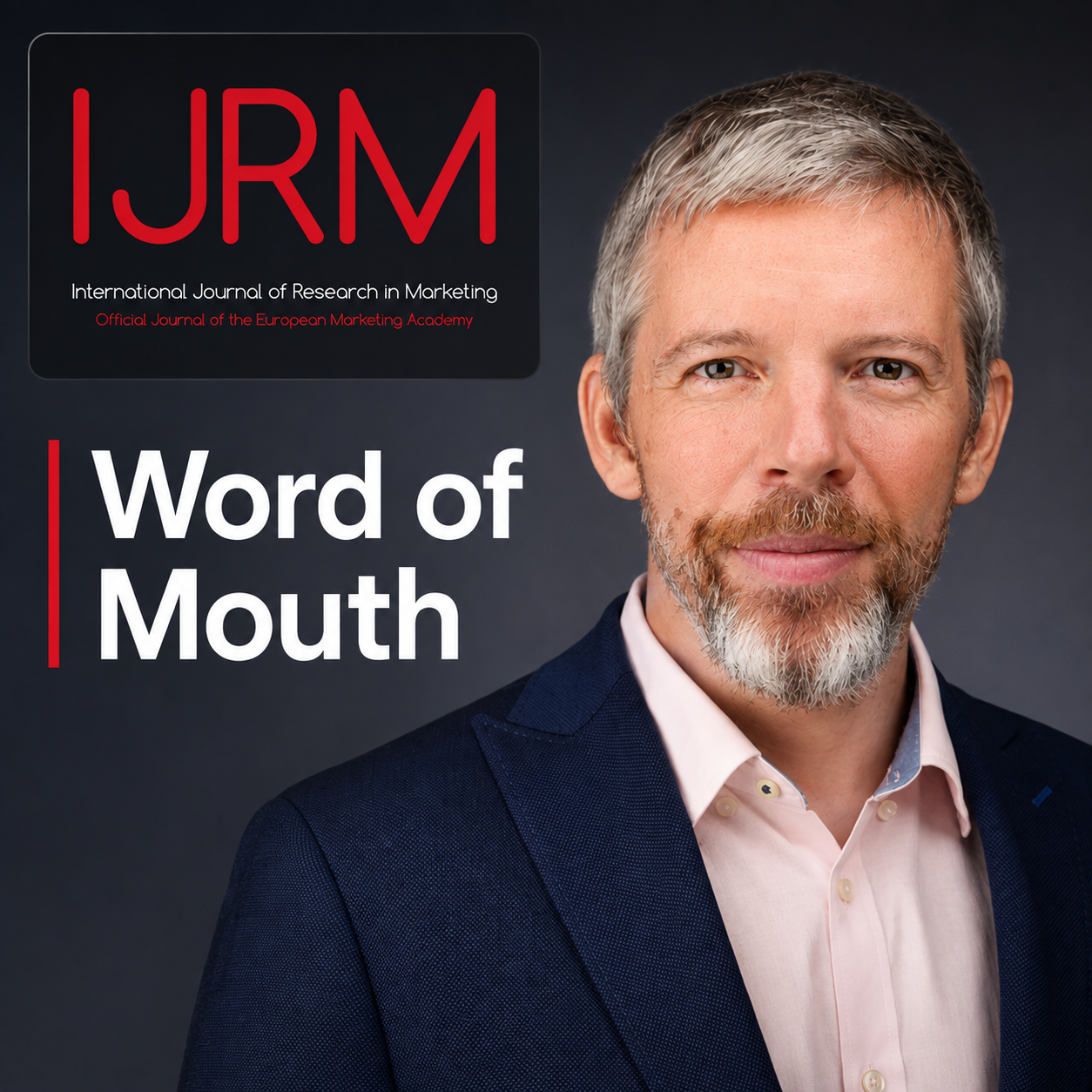
Arnd Vomberg, Associate Professor of Marketing at HEC Paris, shares findings from research published in the International Journal of Research in Marketing on how consumers respond to algorithmic dynamic pricing. The conversation covers trust erosion, price search behavior, the habituation effect, and the interventions, including competitor price matching and price guarantees, that can reduce backlash without eliminating the strategy.
Dr. Ilan Strauss, co-director of the AI Disclosures Project, joins the podcast to examine why AI governance problems originate in market structure rather than model behavior. The conversation covers open protocols, telemetry disclosure requirements, cross-border regulatory fragmentation, and the structural parallels between AI's content compensation failures and the early platform economy.
YPulse chief content officer MaryLeigh Bliss and media analyst Evan Shapiro join Gabriella Mirabelli to examine what YPulse's brand tracker data reveals about how young consumers perceive streaming and entertainment platforms today. The conversation traces the gap between brands that measure as culturally hot or cool and the behavioral data on actual platform usage, and what that divergence means for studios still structured around legacy distribution.
In this episode, Jack Oujo discusses his book ,Too Smart to Be an Umpire, and how to reinvent oneself. After eight years pursuing major league umpiring, Oujo was let go. The rejection could have broken him, but instead he pivoted, applying lessons he learned officiating to entrepreneurship and building a wealth management career that far exceeded what a career as a major league umpire could have offered.
Simon Blanchard, Dean's Professor of Marketing at Georgetown and co-editor at the Journal of Marketing Research, discusses research published in the International Journal of Research in Marketing on the four-actor ecosystem operating beneath most loyalty programs and embedded buy-now-pay-later financial services. The conversation covers how equity theory applies to consumer data exchange, why perceived fairness is almost always miscalibrated, and what CMOs should ask before embedding a third-party financial provider in their customer experience.
Ron Rubin, entrepreneur and author of Gold in Your Backyard, built the Republic of Tea and River Road Family Vineyards over five decades while maintaining debt-free operations. His book, named after his father's expression about recognizing opportunities right in front of you, compiles 50 life lessons drawn from Ron’s entrepreneurial career. The conversation covers his approach to risk evaluation, premium brand positioning in commodity markets, finding mentors by direct outreach, and building company culture through values rather than just compensation. The conversation touches on everything from practical decisions about work-life boundaries and incorporating feng shui principles into business design to budgeting for mistakes to reduce innovation pressure.
Paul D'Arcy, CMO at Moloco, discusses how AI has fundamentally altered the balance between human and machine decision-making in marketing, with digital advertising becoming the first majority AI business as machines outperform human intervention at complex optimization tasks. The conversation explores why marketers focus too heavily on using AI for internal workflow efficiency while missing larger strategic implications of AI-driven transformations in consumer discovery and purchase behavior that require rethinking brand relevance, community building, and owned digital experiences.
In today’s episode, MaryLeigh Bliss, Chief Content Officer at YPulse, brings data from two reports tracking brand coolness and brand loyalty among consumers aged 13 to 39. The conversation examines why the forces driving each are largely distinct, what is causing loyalty among younger cohorts to shift faster than a gradual trend would explain, and what one legacy brand did to move 67 places in the cool ranking in a single year.
FeaturedWhat People Are Saying
“Gabriella was well-versed in both the social and technical aspects of the complex topic we were discussing—a rarity with interviewers, in my experience. And then, she showed her true skill—each successive question was based on my answers, a sign of a genuine listener. Our conversation was a mutual journey of discovery. This was the best interview I’ve had on this topic. Gabriella is out of this world!” – Jim Wetherbee, Former Astronaut, NASA
“Gabriella has a unique ability to cover a wide range of topics while zeroing in on key messages and insights. She made me feel like I was a good friend and that she genuinely cared about my life and career. The conversation was engaging, interesting and relevant to her audience.” – Jack Myers, Founder of Media Village
“It was an honor to talk to Gabriella about my career. The way Gabriella asked her questions make me think about things in a way that I haven’t in a long time—the conversation was introspective, thoughtful, and disruptive. Would do it again in a heartbeat! – Marcelle Karp, Co-Founder of BUST / Founder of BARB Magazine